

Introduction
Medical technology has transformed modern healthcare, allowing doctors to diagnose and treat diseases with greater accuracy than ever before. One of the most important advancements in medical imaging is MRI technology. Commonly known as MRI tech, this technology plays a critical role in detecting and monitoring a wide range of medical conditions.
MRI tech uses advanced magnetic fields and radio waves to create detailed images of the inside of the human body. Unlike some imaging methods, MRI does not use ionizing radiation, making it a safer option for many patients.
This article explains what MRI tech is, how it works, its applications, benefits, challenges, and its future in healthcare.
What Is MRI Tech?
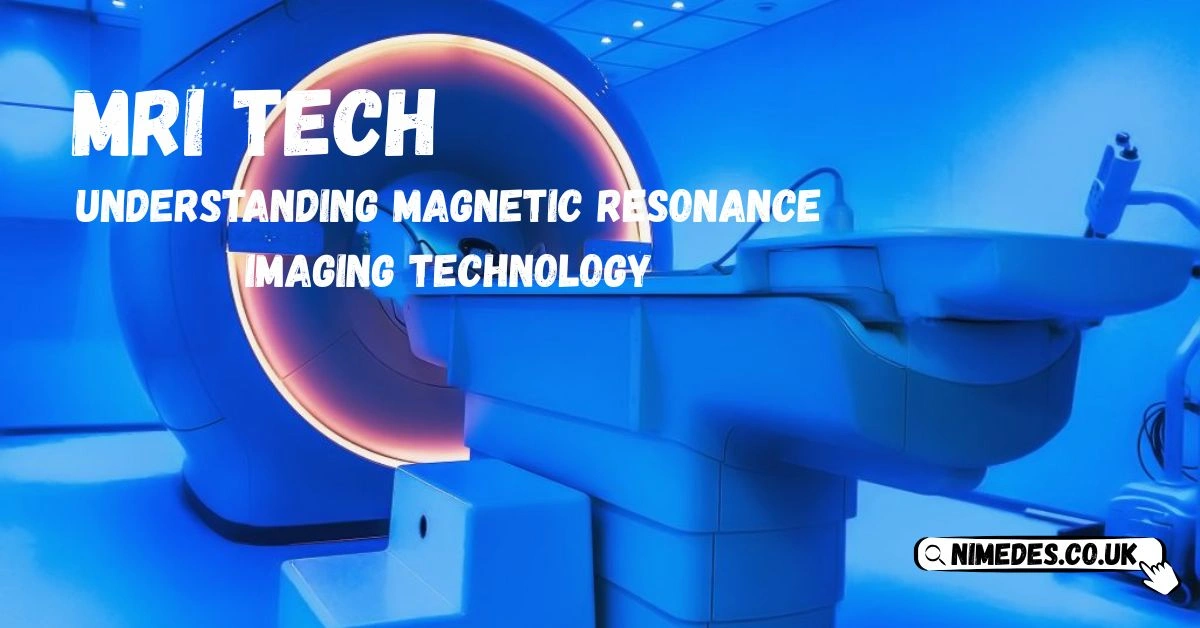
MRI tech refers to the technology behind Magnetic Resonance Imaging (MRI), a medical imaging technique used to produce high-resolution images of organs, tissues, and structures inside the body.
MRI machines are widely used in hospitals, diagnostic centers, and research institutions. They help doctors examine areas such as the brain, spine, joints, heart, and internal organs with exceptional clarity.
MRI tech is especially valuable because it provides detailed soft-tissue images that other imaging techniques may not capture as clearly.
How MRI Technology Works
MRI technology works by using a powerful magnetic field combined with radiofrequency waves.
Here is a simple explanation of the process:
- The patient lies inside an MRI scanner that contains a strong magnet.
- The magnetic field aligns hydrogen atoms in the body.
- Radio waves are sent into the body, temporarily disrupting this alignment.
- When the radio waves stop, the atoms return to their original position and release energy.
- This energy is captured and processed by a computer to create detailed images.
This process allows MRI techs to generate highly accurate images without causing harm to the body.
Key Components of MRI Tech
MRI technology is made up of several important components:
1. Magnet System
The magnet is the core of MRI tech. It creates a strong and stable magnetic field that makes imaging possible.
2. Radiofrequency Coils
These coils send and receive radio waves that interact with the body’s atoms to produce signals.
3. Gradient Coils
Gradient coils help locate the exact position of signals, allowing the system to build detailed images.
4. Computer System
Advanced computers process the signals and convert them into visual images that doctors can analyze.
Common Uses of MRI Tech
MRI tech is used across many areas of medicine due to its accuracy and safety.
Neurology
MRI scans are widely used to examine the brain and spinal cord. They help detect conditions such as tumors, strokes, multiple sclerosis, and brain injuries.
Orthopedics
Doctors use MRI tech to view joints, muscles, ligaments, and tendons. It is commonly used for sports injuries and joint problems.
Cardiology
MRI helps assess heart structure, blood flow, and heart muscle health.
Oncology
MRI tech plays an important role in detecting and monitoring tumors, helping doctors plan treatment more effectively.
Abdominal Imaging
MRI scans can examine organs such as the liver, kidneys, pancreas, and reproductive organs.
Benefits of MRI Technology
MRI tech offers several advantages over other imaging methods:
- No Radiation Exposure: MRI does not use X-rays or radiation.
- High Image Quality: Produces detailed images of soft tissues.
- Non-Invasive: No surgical procedures are involved.
- Accurate Diagnosis: Helps detect conditions at early stages.
- Versatile Applications: Useful across many medical specialties.
These benefits make MRI tech a preferred choice for many diagnostic needs.
Limitations and Challenges of MRI Tech
While MRI technology is powerful, it does have some limitations:
- High Cost: MRI machines are expensive to install and maintain.
- Long Scan Time: MRI scans can take longer than other imaging methods.
- Noise Levels: MRI machines can be loud during operation.
- Metal Restrictions: Patients with certain implants or metal objects may not be eligible for MRI scans.
- Claustrophobia: Some patients feel uncomfortable in enclosed spaces.
Despite these challenges, continuous improvements are making MRI tech more accessible and comfortable.
Role of MRI Technologists
MRI technologists are trained professionals who operate MRI machines and ensure patient safety during scans.
Their responsibilities include:
- Preparing patients for MRI exams
- Operating MRI equipment
- Monitoring patients during scans
- Ensuring image quality
- Following safety protocols
MRI technologists play a crucial role in delivering accurate diagnostic results.
MRI Tech and Patient Safety
Patient safety is a top priority in MRI technology. Strict safety guidelines are followed to prevent risks related to strong magnetic fields.
Safety measures include:
- Screening patients for metal implants
- Using protective equipment
- Monitoring vital signs when necessary
- Ensuring proper machine calibration
These precautions make MRI tech a reliable and safe imaging option.
Advancements in MRI Technology
MRI tech continues to evolve with new innovations improving speed, accuracy, and patient comfort.
Recent advancements include:
- Faster Imaging Techniques: Reduced scan times
- High-Field MRI Systems: Improved image resolution
- Functional MRI (fMRI): Measures brain activity
- AI Integration: Enhances image analysis and diagnostics
- Open MRI Systems: Designed for patient comfort
These advancements are expanding the capabilities of MRI technology.
MRI Tech in Research and Innovation
Beyond clinical use, MRI tech plays a vital role in medical research. Researchers use MRI to study brain function, disease progression, and treatment outcomes.
MRI technology also supports advancements in neuroscience, psychology, and pharmaceutical research.
Future of MRI Technology
The future of MRI tech looks promising, with ongoing research focused on making scans faster, more affordable, and more precise.
Future developments may include:
- Portable MRI systems
- Greater use of artificial intelligence
- Improved accessibility in developing regions
- Enhanced patient-friendly designs
MRI tech will continue to be a cornerstone of modern healthcare.
Frequently Asked Questions (FAQs)
What does MRI tech stand for?
MRI tech refers to Magnetic Resonance Imaging technology used for medical imaging.
Is MRI tech safe?
Yes, MRI technology is considered safe as it does not use ionizing radiation.
How long does an MRI scan take?
Most MRI scans take between 20 and 60 minutes, depending on the type of exam.
Can everyone have an MRI scan?
Some people with metal implants or medical devices may not be eligible for MRI scans.
What is the role of an MRI technologist?
An MRI technologist operates the MRI machine and ensures patient safety during the scan.
Conclusion
MRI tech is one of the most advanced and reliable medical imaging technologies available today. Its ability to produce detailed images without radiation makes it an essential tool in modern healthcare.
From diagnosing complex conditions to supporting medical research, MRI technology continues to improve patient care and outcomes. As advancements continue, MRI tech will remain a key pillar of diagnostic medicine for years to come.
Explore the topic in greater technical depth on: Nimedes.co.uk.