

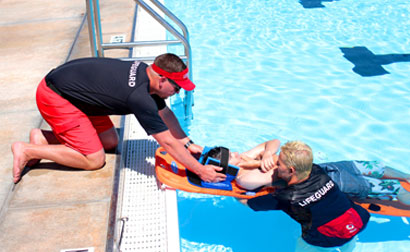
The image is universal: a wary figure perched over the glittering water, a symbol of safety etched against the heavens. Though in theory, after completing lifeguard training, this individual is trained for crises, do we grasp the great psychological, moral, and physical world enclosed within the phrase “lifeguard”? To protect a life is to accept a covenant of great responsibility, one reaching far beyond the whistle and the rescue tube. Hyper-vigilance, ethical training, and facing the frailty of human life in marine environments are daily workouts in this job.
How Does a Lifeguard’s Mind Actually Work?
Contrary to the typical “beach bum” stereotype, an effective lifeguard’s mental condition is one of diligent, active observation. It is a structured scanning pattern, a mental grid used to scan the surface of the water and the events inside, not passive watching. Many standards call this the “10/20 protection rule”—that is, scanning a region entirely within ten seconds and being able to reach a victim within 20 seconds. A core component of how to maintain professional lifeguarding skills is the constant drilling of this observational discipline until it becomes second nature. Variables are always being processed by their minds: the tired swimmer wandering past the break line, the energetic kids whose wrestling edges toward risk, the slight variation in a swimmer’s stroke that could point to misery.
This mental structure generates a particular type of stress: a low-grade, unending accountability hum. The lifeguard is mentally prepared to battle “inattentional blindness,” where everyday life can conceal the disaster. They are looking for the lack of expected movement, the silent slide under the surface; they are not only looking for shrieks and splashes. Maintaining this cognitive load over many hours in a sensory-rich environment is the first and most continuous concealed need of the industry.
Is Preventing a Rescue the Truest Measure of Success?
The ultimate of the lifeguarding story is the heroic extraction from the jaws of doom—that is, the spectacular rescue. Although these events define the ultimate goal of the profession, the most competent lifeguards measure their success inversely proportional to such interventions. Their voice is their most effective weapon, not their emergency gear. Excellence is characterized by preventative measures and proactive surveillance.
This comprises the sometimes unfashionable enforcement and instruction labor. It means surely telling a careless diver, carefully clarifying rip current hazards to a tourist, or repeatedly enforcing pool regulations that may seem boring to visitors. Every avoided incident is a silent triumph, a trauma never experienced, a life-changing event never transpired. The ethical foundation of a lifeguard is in this preventative attitude—it is a dedication to stewardship over the surroundings and the people in it, awareness that the best rescue is the one you never have to do.
What Is the Emotional Aftermath of a Critical Incident?
Public perception frequently freezes at the climax of the rescue: the victim is pulled to safety, the throng gathers, and the ambulance comes. The narrative finishes. But for the lifeguard, this is usually where a deeply secret chapter starts. Managing a critical event—especially one involving a child, a traumatic injury, or a fatality—can be psychologically heavy. Often, young lifeguards see human mortality and catastrophe in a manner that most careers shield their workers from for decades.
The emotional resilience needed is astounding. They have to perform perfectly under great stress, thus making split-second logistical and medical judgments. Their training notwithstanding, they can fight with “what-ifs,” the normal human reaction to calamity afterwards. Although critical incident stress debriefing is gaining ground, the historical emphasis on stoicism in the field has shaped its culture. Understanding the whole range of their responsibility depends on realizing that lifeguards are also emotional witnesses to tragedy, not just physical saviors.
How Does the Environment Itself Become an Adversary?
The backdrop of a lifeguard’s work is not fixed; it is a lively, sometimes unfriendly, force to be controlled. Battling shifting sands, rip currents, crashing surf, and changing tides is the ocean lifeguard. The pool or waterpark lifeguard combats intense noise, chemical exposure, and hard surfaces that can lead to catastrophes. Sudden weather swings and misleading distances confront the open-water lifeguard on a lake.
This calls not just original certification but also a profound, local, and ongoing education. Reading the water like a text during lifeguard classes, a lifeguard has to grasp its moods and hazards. For hours on end, they must control their own physical exposure to wind, cold, heat, and sun. Their body is their main tool; its deterioration—whether via dehydration, hyperthermia, or tiredness—directly endangers public safety. Fighting environmental elements is a silent, everyday struggle that calls for as much readiness as saving a life does.
Can a Seasonal Job Forge a Lifelong Character?
Attracted by the outdoor labor and the expected social standing, many start lifeguarding as a summer job. Often, what they get is a basic course in professional and human morality. The abilities developed have consequences throughout a lifetime: outstanding responsibility, capacity to perform under pressure, need for open communication within a team, and the humility from bearing such a crucial, public trust.
Often viewed as a sign of power, the uniform more truly symbolizes this supposed accountability. It means that the person wearing it has intentionally chosen a role where personal comfort or convenience comes below the good of society. Few other entry-level jobs can affect decision-making, maturity, and personal integrity as early immersion in a culture of service and attention does.
Who Guards the Guardians?
This brings up the fundamental, systematic issue of support. Strong, continuous systems are needed to make sure lifeguards are able to bear these burdens. This entails going past a basic attention on first certification to create a society of ongoing training, mental health resources, and professional respect. This holistic support is what enables the development and retention of truly experienced lifeguards for beach safety in my area and beyond. Agencies must give enough personnel top priority to avoid tiredness, offer advanced and consistent scenario-based training, and destigmatize the pursuit of psychological support following traumatic events.
Recognizing lifeguards as qualified public safety specialists rather than as temporary seasonal help will determine the direction the profession will take going forward. Their instruction should be taken as seriously as that of other first responders. Their welfare is directly related to that of the communities they serve.
To ultimately protect a life is to stand at the convergence of human weakness and human delight. It is to be the calm inside the storm, the prepared mind in the face of mayhem, and the usually unthanked sentinel that enables leisure. The glitz is a mirage; the reality is a deep commitment written not in headlines of heroism but in the countless, quiet days of unrelenting watchfulness where nothing happens at all. That represents their most remarkable achievement.